Why Dahlonega-area homeowners and builders need a local septic installer
Lumpkin County grew from 29,966 people in the 2010 Census to 33,488 in 2020, and the area around Dahlonega keeps drawing retirees, weekend buyers, and University of North Georgia families. Median home value was about $249,400 in 2022, with roughly 77 percent of homes owner-occupied. New houses go where land is available, and much of that land has no sewer.
The new North Georgia Medical Center in Lumpkin opened near the intersection of Highway 60 and GA 400 in late 2023. Growth along that corridor is pushing new homes onto acreage that was farmland or forest a decade ago. Whether any of it can take septic is a soil question, not a zoning question.
Septic here is a foothills problem. The ground slopes, the rock can be shallow, and trees cover everything. An installer who works in Dawson County, one county south, knows the same kinds of soils and the same kinds of surprises.
Septic services near Dahlonega
New home septic systems
The common case on acreage north of downtown and along Highway 60 North, where listings often say plainly that there is no public water or sewer. Start with the soil report.
Septic tank replacement
Older cabins and weekend houses in the hills often run on systems that nobody has serviced in years. Evaluation comes first.
Drain field installation
Slopes and shallow rock make field placement the hard part here. A pumped system sometimes carries liquid to the best soil.
Lake lots
Lake Lanier is on the other side of Dawson County, but the same small-lot rules apply to shoreline buyers who look up here for a second home.
Soil tests and permit help
Buying acreage near the national forest? Check the soil before you check the view.
Working in Dahlonega and Lumpkin County
Septic permits in Lumpkin County come from Lumpkin County Environmental Health, part of the state health department. Reach them through Lumpkin County government at (706) 864-3742, or at lumpkincounty.gov. Building permits go through the county's development and inspections office, and the City of Dahlonega handles its own water and sewer service. The state's guidance is at Georgia DPH Environmental Health.
What you should expect to ask for depends on where the parcel sits.
Some lots north of downtown, such as the platted lots at The Ridge at Dahlonega, advertise a gravity sewer tie-in on Summit Drive. If your lot is near a line, a sewer connection may beat septic on cost and hassle. Ask the City of Dahlonega Water & Sewer Services before you design anything.
Large tracts along Highway 60 North are listed as having no public water or sewer. Expect a well and a septic system, and expect the soil report to decide where the house goes. Longer driveways and utility runs add to the budget.
Some tracts back up to the Chattahoochee-Oconee National Forests. They are wooded and mostly sloping, with building sites you have to find. A pumped system or a split layout may be the way to reach usable soil. Access for equipment is part of the quote.
Wells matter wherever you are. Tell Environmental Health about every well on or near the lot, because distance from a well affects where the tank and field can go.
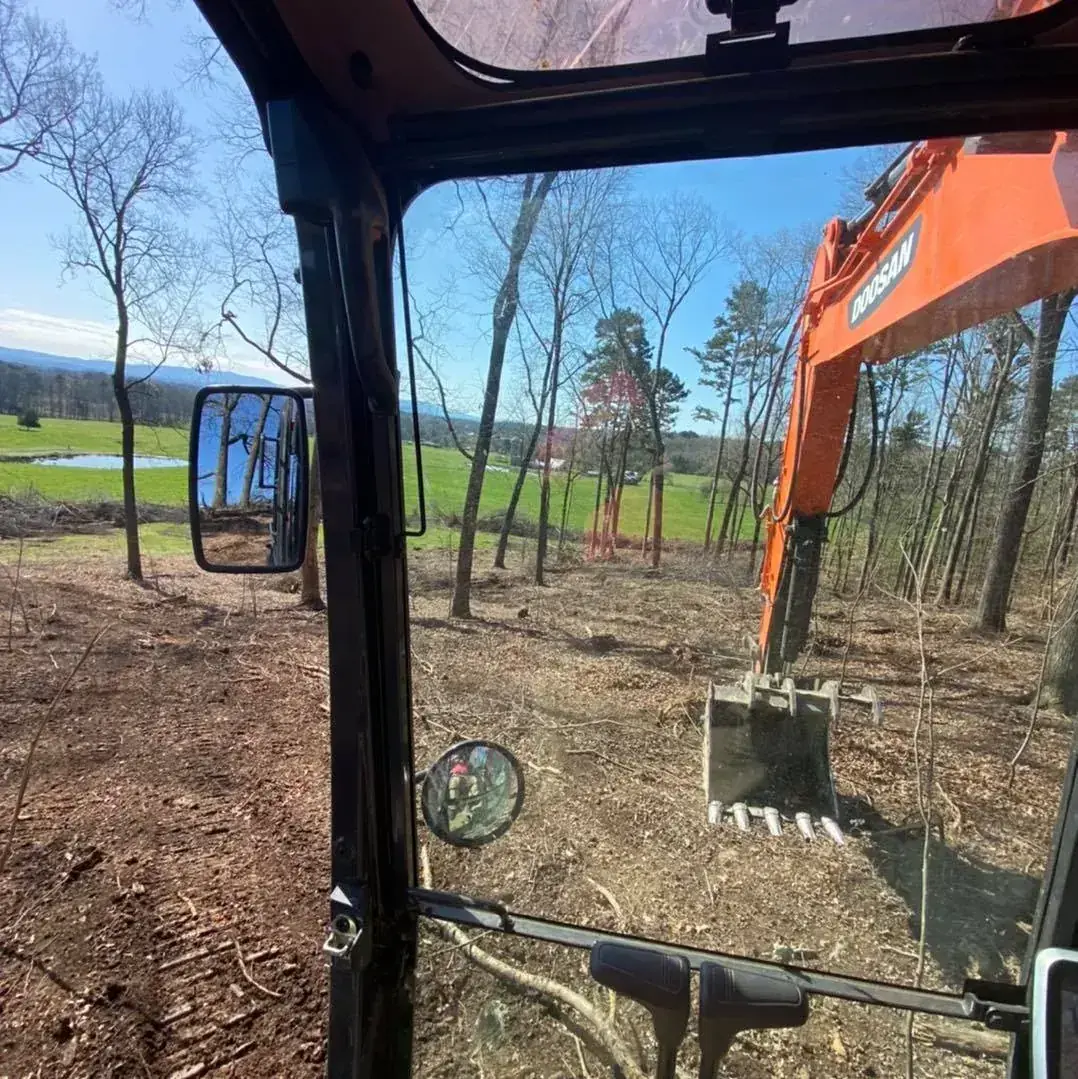
Where we work around Dahlonega
- Highway 60 North. Acreage, farm parcels, and new homes, much of it without public sewer.
- North of downtown. Platted development lots and older neighborhoods, some with sewer available.
- The GA 400 and Highway 60 junction. Where the new medical center sits and where growth is spreading out from.
- Toward Dawsonville. Foothills and farmland between the two towns, in both counties.
Between Dahlonega and Dawsonville, the county line is easy to cross without noticing. If you are near it, check which Environmental Health office covers your parcel. See our service area.
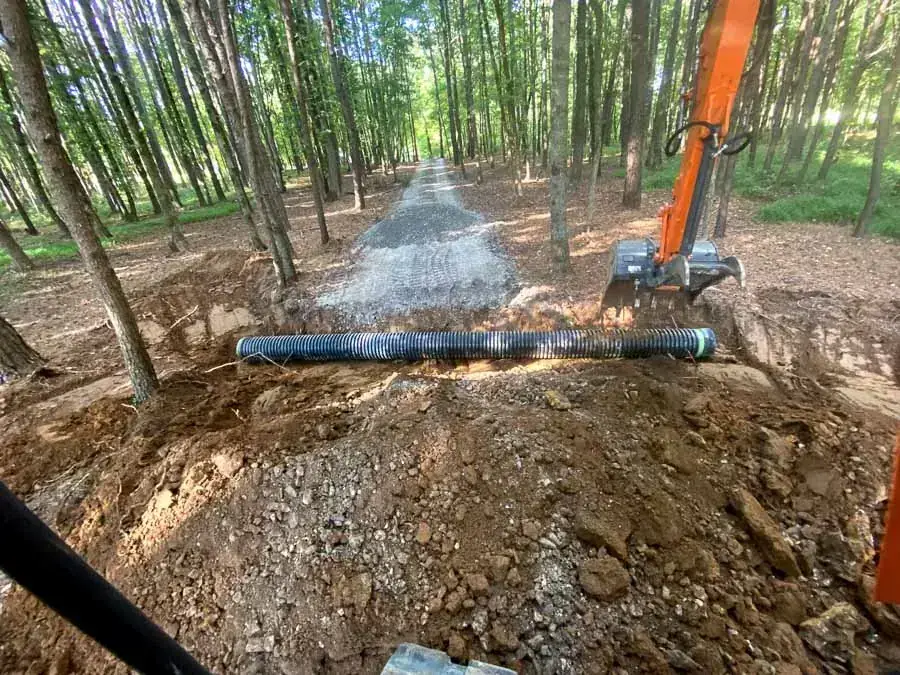
How septic installation works near Dahlonega, step by step
Call and check for sewer
We ask for the address and help you confirm whether a sewer line is available from the City of Dahlonega or the county before anyone designs a septic system.
Soil evaluation
A certified soil classifier evaluates the lot. On sloped, wooded ground this can take longer, and it often moves the building site.
Lumpkin County Environmental Health permit
The design is reviewed and permitted by Lumpkin County Environmental Health. This is the compliance step, and your building permit depends on it. Permits are generally valid for 12 months.
Install, inspect, and restore
We install with as little disturbance as the site allows, call for the inspection before covering, and leave you with paperwork and a marked reserve area.
About Dahlonega and Lumpkin County
Dahlonega sits in the foothills of the Blue Ridge, and Lumpkin County borders Dawson County to the north. It is home to the University of North Georgia, a historic downtown square, and a tourism economy that now shares space with a growing year-round population. Learn more at Lumpkin County government and the City of Dahlonega.
Nearby areas we also serve: Dawsonville and Dawson County and north Forsyth near Cumming.