Septic installation in Dawsonville, GA
Dawson County is growing quickly, and much of the land outside the city and the GA 400 corridor still runs on septic. We are the septic installer for Dawsonville and Dawson County, handling septic system design, tank installation, and drain field installation, and we tell you plainly what the soil report and Environmental Health will need before you spend money on the wrong lot.
- Free scope of work estimate
- Licensed and insured
- Georgia DPH-certified installers
- Reply within one business day
A typical lot plat. Tap any part.
Your lot, in one picture. A septic system is a tank, a box, a drain field, and a reserve area, placed around the house and the well. Tap a part to see what it does.
Request your free estimate
Tell us about the lot. We call back within one business day with a free scope of work estimate.
What happens after you send it
We call you back
Within one business day, to confirm the address, bedroom count, and water source.
We scope the job
We look at the lot, the soil report if you have one, and what Environmental Health will need.
You get a free estimate
Every line itemized: soil report, permit, tank, field, and site work.
Not sure what to ask yet? The permit planner turns five questions into a checklist.
Septic installation services in Dawsonville, by the problem you have
How septic system installation works in Dawson County
1. Call and walk the lot
Tell us the address, bedroom count, and whether you are on a well or public water. We look at where the house, driveway, and any wells sit, and explain what the soil report will decide.
2. Soil report and permit
A certified soil classifier evaluates the ground. Environmental Health reviews the design and issues the permit. You get a free, itemized estimate that says what is and is not included.
3. Install and inspect
We set the tank, build the field, and call for the inspection before anything is covered. You get the paperwork and a marked reserve area on your plat.
Why call us first
- We start with the permit, not the shovel. Most septic surprises are paperwork and soil surprises. We raise them before you commit.
- Free estimates, itemized. You can see what the soil report, permit fees, tank, and field each cost.
- We know which office does what. County, city, and the health department each hold a piece. We tell you who to call and in what order.
- One person answers. You talk to the same contact from the first call to the final inspection.
What to expect from us
We do not show reviews here until real customers write them. Until then, this is what you can hold us to: a call back within one business day, a free scope of work estimate with every line itemized, a plain explanation of any soil or permit problem we find, and an inspection scheduled before anything is buried.
If we are not the right fit for your lot, we will say so and point you to Environmental Health.
Where our septic installers work
Dawsonville is home base. Septic jobs also come up across Dawson County and in the nearby parts of two neighboring counties.
Dawson County septic questions, answered
Does my lot need septic, or can I tie into sewer?
Sewer service in Dawson County is concentrated in and around the City of Dawsonville and parts of the GA 400 corridor. Past those areas, most homes run on septic. The only way to know for one address is to ask the provider: Etowah Water & Sewer Authority at (706) 216-8474 or the City of Dawsonville at (706) 265-3256. If a line is available, run the numbers on connecting before you pay for a septic design.
Who issues the septic permit here?
Dawson County Environmental Health, part of the state health department, at 189 Highway 53 West, Suite 102 in Dawsonville. They are open Monday through Friday, 8 to 5, closed noon to 1, and ask you to call for an appointment at (706) 265-2930. The county lists them under Local Agencies for septic tank permits, and both the county and the City of Dawsonville building paperwork point back to that office.
Why does everyone ask for a soil report first?
Because the soil decides the design. A certified soil classifier digs and records what is under your lot: texture, depth to rock, slope, and signs of a seasonal water table. Environmental Health reads that report to decide whether the lot can take a system, how large the drain field has to be, and where it can sit. The health department keeps a list of certified classifiers. Our soil test and permit page walks through how that fits into the schedule.
How much land does a septic system need?
State guidance starts around half an acre when the house is on public water and around an acre when it is on a well, and a local board of health can require more. The lot also has to hold the house, the driveway, the tank, the field, and a reserve area for a replacement field. A lot can be big enough on paper and still fail because the usable soil is in the wrong place. Rules change, so confirm the current numbers with Georgia DPH Environmental Health.
Does the foothills terrain change how a system is built?
It can. Dawson County sits where the Piedmont meets the mountains, and soil, rock, and slope can change over a short distance. One corner of a lot may drain well while another holds water. Steep sites sometimes need a pumped (dosed) system, and shallow rock can limit where the field goes. A USDA soil survey of Dawson, Lumpkin, and White counties from 1972 is held at the Dawson County Library, but it is a starting point and no substitute for testing your own ground.
How long is a septic permit good for?
Georgia on-site sewage permits are generally valid for 12 months from the date they are issued, so sequence the work. Pulling a permit a year before you break ground can leave you paying again. Ask Environmental Health about your permit dates when you apply, and keep the original paperwork where you can find it.
What the work looks like
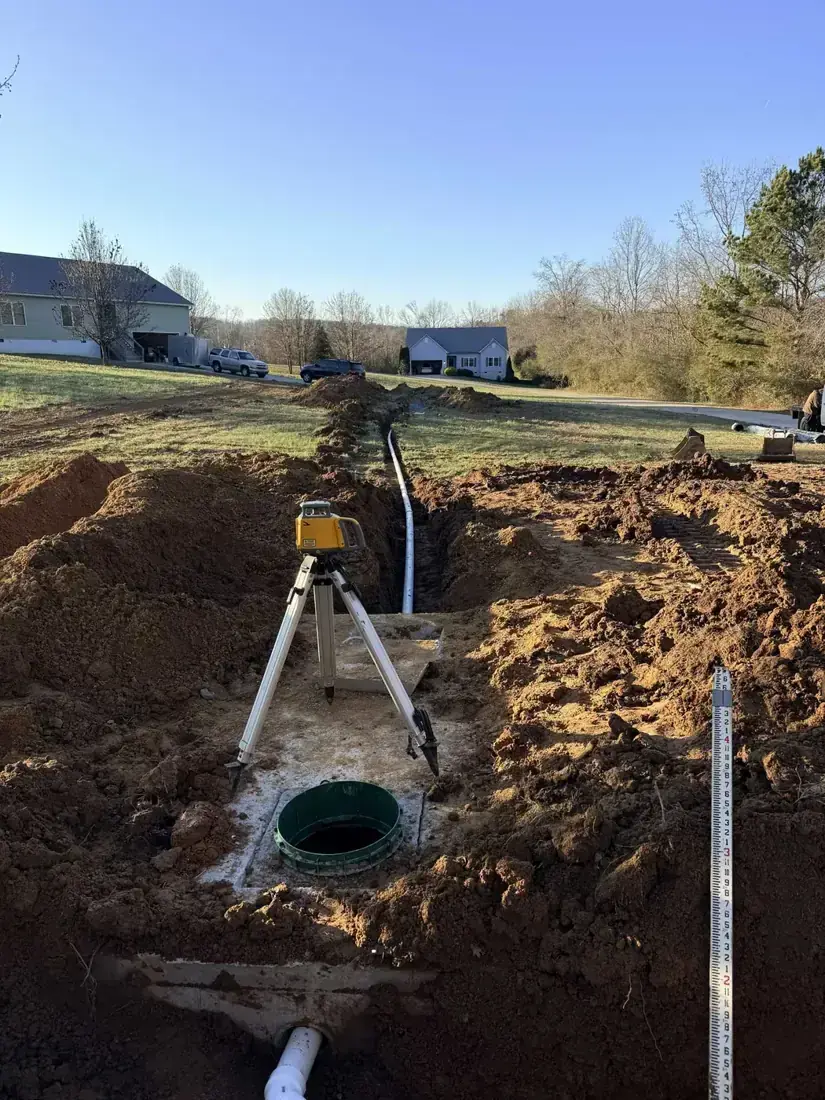
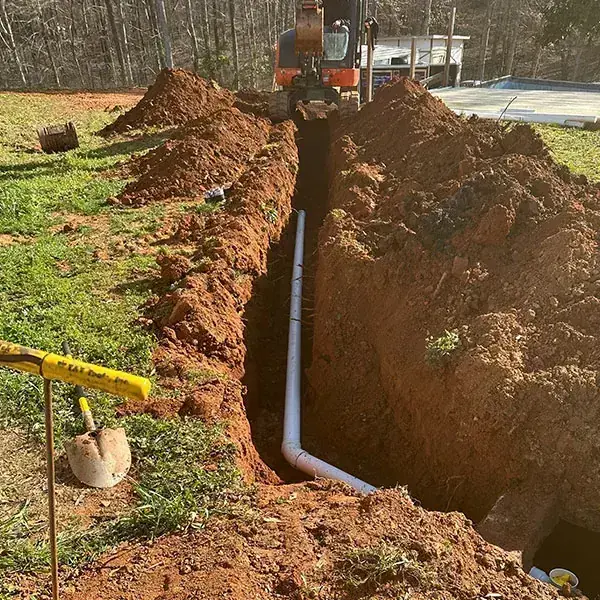
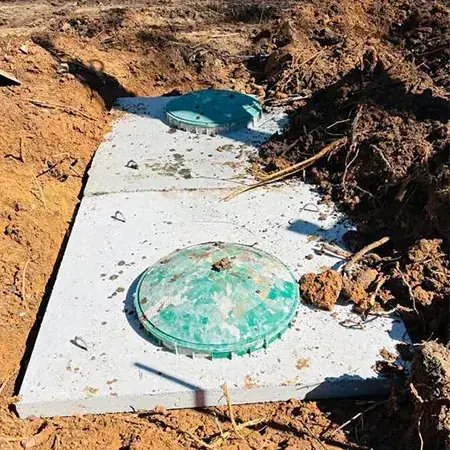
Septic installation is trenches, pipe, and a tank set to grade, then inspected before anything is covered.
Before you call anyone
Five minutes of preparation changes the quality of every quote you get. Tick what you already know.
Dawsonville and Dawson County by the numbers
Septic demand follows building, and building here has picked up sharply. The county sits about 40 miles north of Atlanta along the GA 400 corridor, in the foothills of the North Georgia mountains. Lake Lanier lies along its southeast edge, and the Etowah, Amicalola, and Chestatee rivers run through it.
| Population estimate | 33,748 (July 2024), up 25.9 percent from the April 2020 count |
|---|---|
| Housing units permitted | 1,069 in 2025, against 430 in 2020 (all structure types) |
| Median home value | $351,900 for owner-occupied homes, 2019 to 2023 |
| Homeownership | 78.4 percent |
| Land area | 208 square miles, still largely rural away from GA 400 and the city |
| Septic permits | Dawson County Environmental Health, (706) 265-2930 |
| Water and sewer | Etowah Water & Sewer Authority, (706) 216-8474; City of Dawsonville, (706) 265-3256 |
Sources: U.S. Census Bureau QuickFacts, Census building permit series via FRED, Dawson County government.
A chamber of commerce leader has pointed out that outside the GA 400 corridor and the city, Dawson County is still very rural. That is why septic remains the default for so many new homes here, and why the soil on your particular lot matters more than the neighborhood name.
About Elite Dawsonville Septic Installation
Elite Dawsonville Septic Installation installs septic systems and drain fields in Dawsonville and the surrounding area. We keep the work simple: explain the permit path, get the soil report done early, give you a free estimate, and install it right so you do not think about it again for a long time.
Talk to someone
Call (470) 943-2545 or email sales@dawsonvillesepticinstallation.com. Have the address and bedroom count handy. If you have a soil report or plat, send it and we can give you a better answer on the first call.
Find us in Dawsonville
Elite Dawsonville Septic Installation, 117 Dawson Ave, Dawsonville, GA 30534. Call (470) 943-2545 or email sales@dawsonvillesepticinstallation.com.
Visits by appointment only. Call ahead before you stop by.