How big does a septic drain field need to be?
Size comes from two numbers: how much wastewater the house is permitted to send each day, which is set by bedroom count, and how fast your soil absorbs water. Slower soil needs more trench. One recent Georgia lakeside design for a three bedroom home was sized for 450 gallons a day. Many Georgia boards of health also require a reserve area equal in size to the field, kept clear for a future replacement.
Published cost guides for the Atlanta area put drain field installation at roughly $5,000 to $12,000 and soil testing at $700 to $2,000. The soil report is what turns a range into a real number for your lot.
A drain field does the last and most important step of treatment. The tank only separates solids. The liquid that leaves it is cleaned by moving slowly through the soil, which is why the soil, not the pipe, sets the size.
Want the price lines side by side? See the septic installation cost breakdown.
How do you know your drain field needs work?
Standing water or a lush strip over the trenches
Soggy ground, or a stripe of fast, dark green grass that follows the trench lines, is the classic sign. Liquid is rising instead of soaking down.
Slow drains even after a pumping
If the tank has just been pumped and the house still drains slowly, or the tank refills quickly, the problem is downstream of the tank.
Odor outdoors after heavy rain
A field that smells when the ground is saturated is telling you the soil cannot take any more. It may be a high water table, a clogged field, or both.
Damage to the ground above it
A vehicle driven across the field, a tree planted over it, or fill hauled onto it can all be the start of the trouble. Tell us what has happened on that ground, even if it seems unrelated.
What drain field installation includes
The type of field is chosen from the soil report and approved by Environmental Health. Choose a tab to compare the common ones.
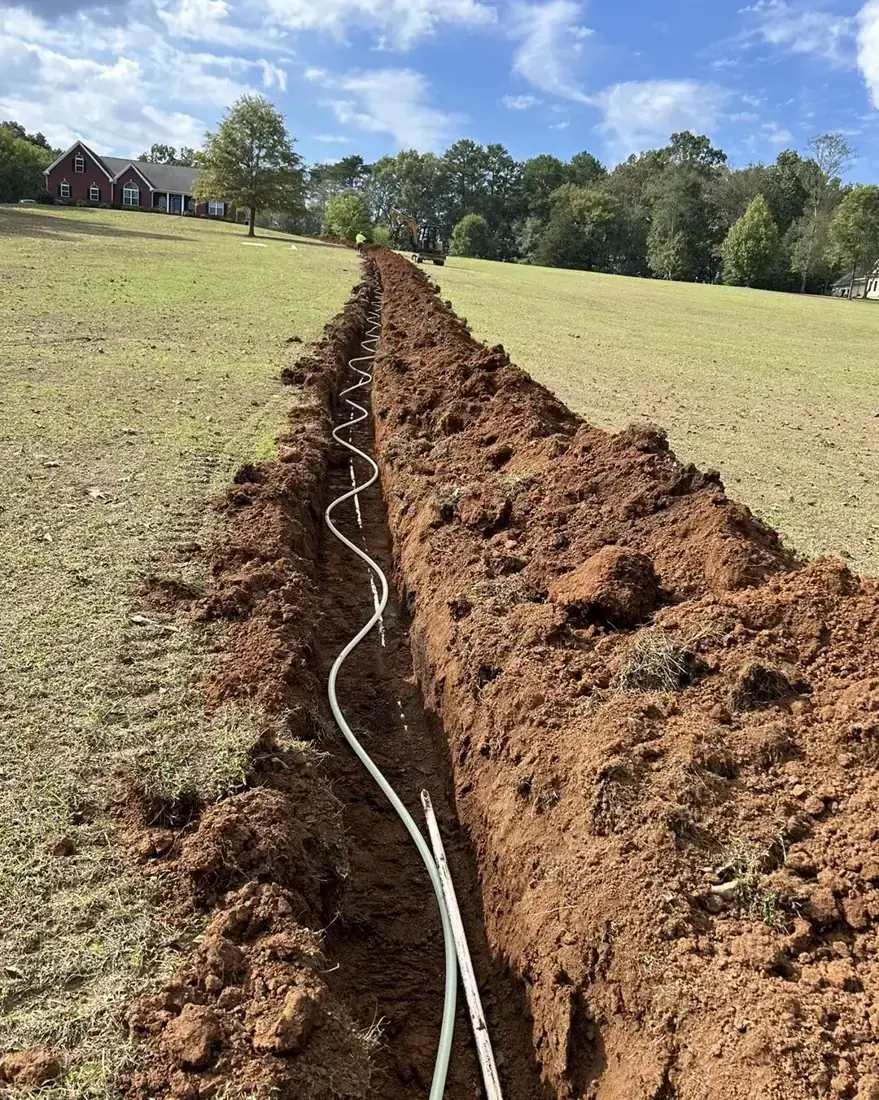
Perforated pipe laid in gravel-filled trenches in the soil, spread out so each line gets a share of the liquid. It is the simplest system and the one we install most when the soil is deep and drains well.
Best on gently sloping ground with enough depth to rock and the water table.
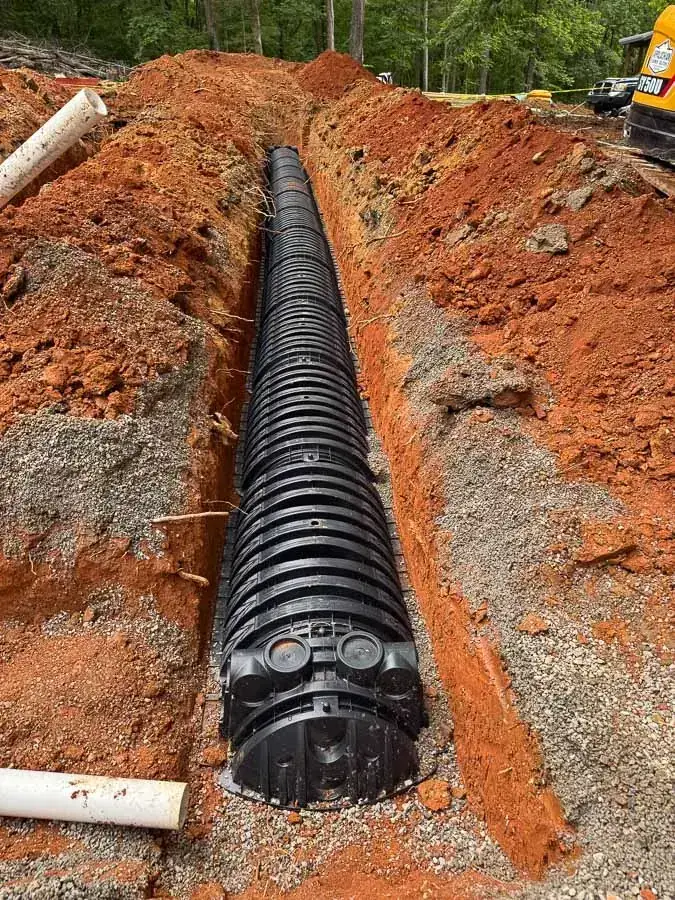
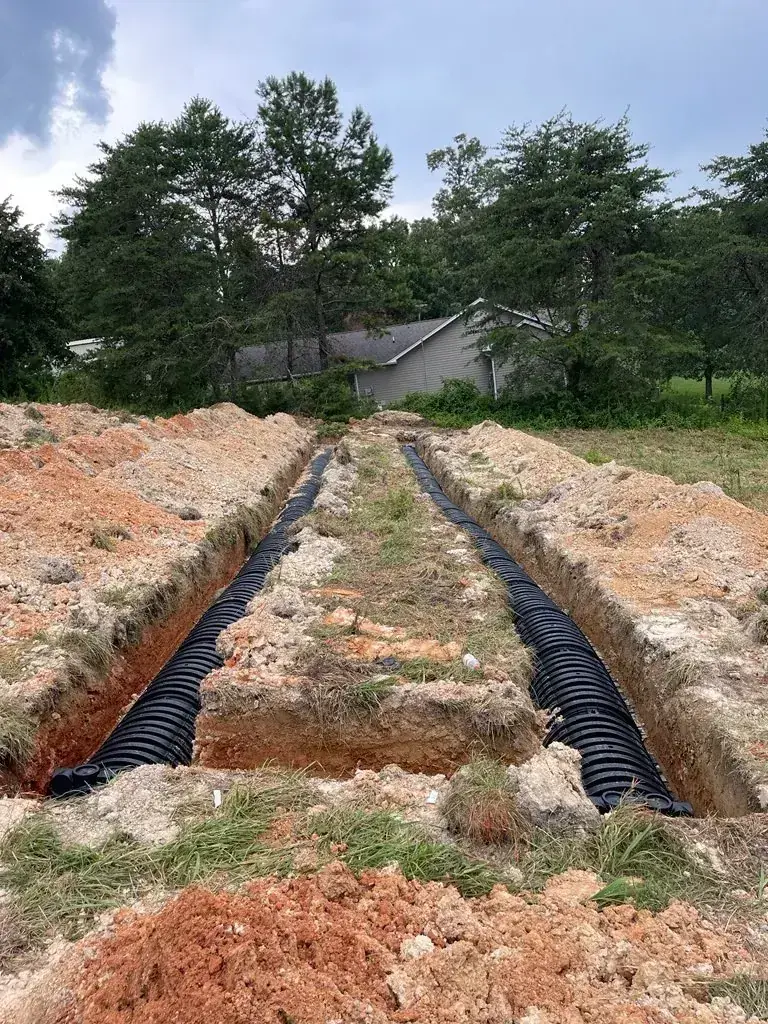
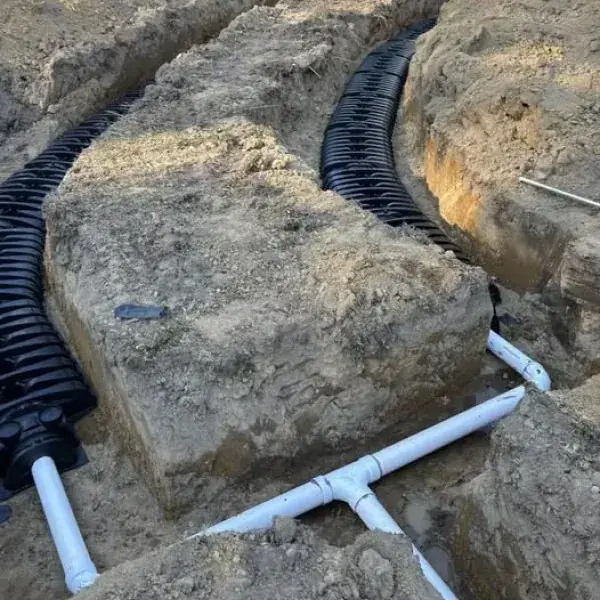
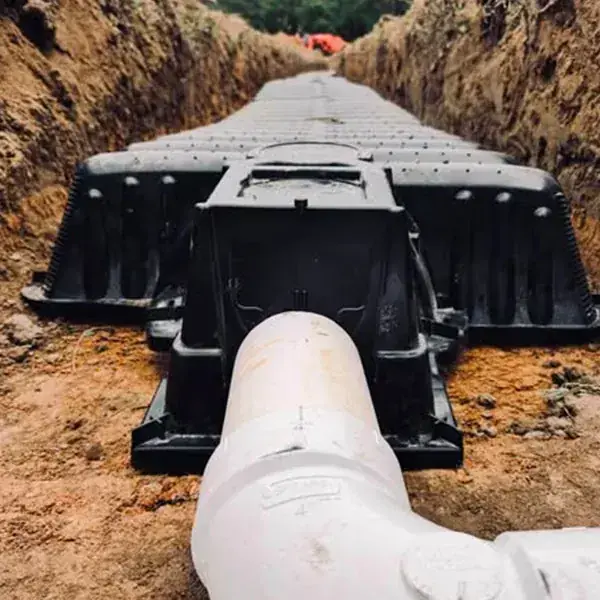
Open-bottom plastic chambers take the place of gravel and pipe. Georgia's on-site rules cover conventional and chamber systems together. Chambers are lighter to handle, can sometimes fit a tighter layout, and spread liquid over a wide bottom area.
Common on lots where hauling gravel is hard or the layout is tight.
When the soil is too shallow, too slow, or too wet for a conventional field, an alternative design may be possible. These systems need health department approval, and some counties ask for a more detailed soil report and an engineered plan before they review them.
Alternatives cost more, and not every lot qualifies. We will tell you early if yours looks like a candidate.
Why do drain fields fail?
Most failures come from a short list of causes, and most of them are preventable. Open each to see what to watch for.
Too much water at once
Grease and solids
Compaction and damage
Roots and groundwater
Surface water running in
What changes for drain fields in Dawson County
Dawson County sits where the Piedmont meets the mountains, and the ground shows it. Soil depth, rock, and slope can change from one corner of a lot to another. A USDA soil survey of Dawson, Lumpkin, and White counties from 1972 is held at the Dawson County Library, and it is a useful map of what to expect, but your own lot needs its own soil report.
- Slope. Steeper ground can mean a pumped system to carry liquid uphill or across the lot to the best soil.
- River valleys. Land along the Etowah, Chestatee, and Amicalola rivers can include floodplain or a seasonal high water table, which limits where a field can go.
- Shallow rock. Rock close to the surface limits trench depth and can push the field to a different part of the lot.
- Wells. Public water is not everywhere here. When a lot has a well, the field has to stay away from it, and Environmental Health needs to know where it is.
Environmental Health is at 189 Highway 53 West, Suite 102, Dawsonville, (706) 265-2930. Call for an appointment. Our soil test and permit page covers what to bring.
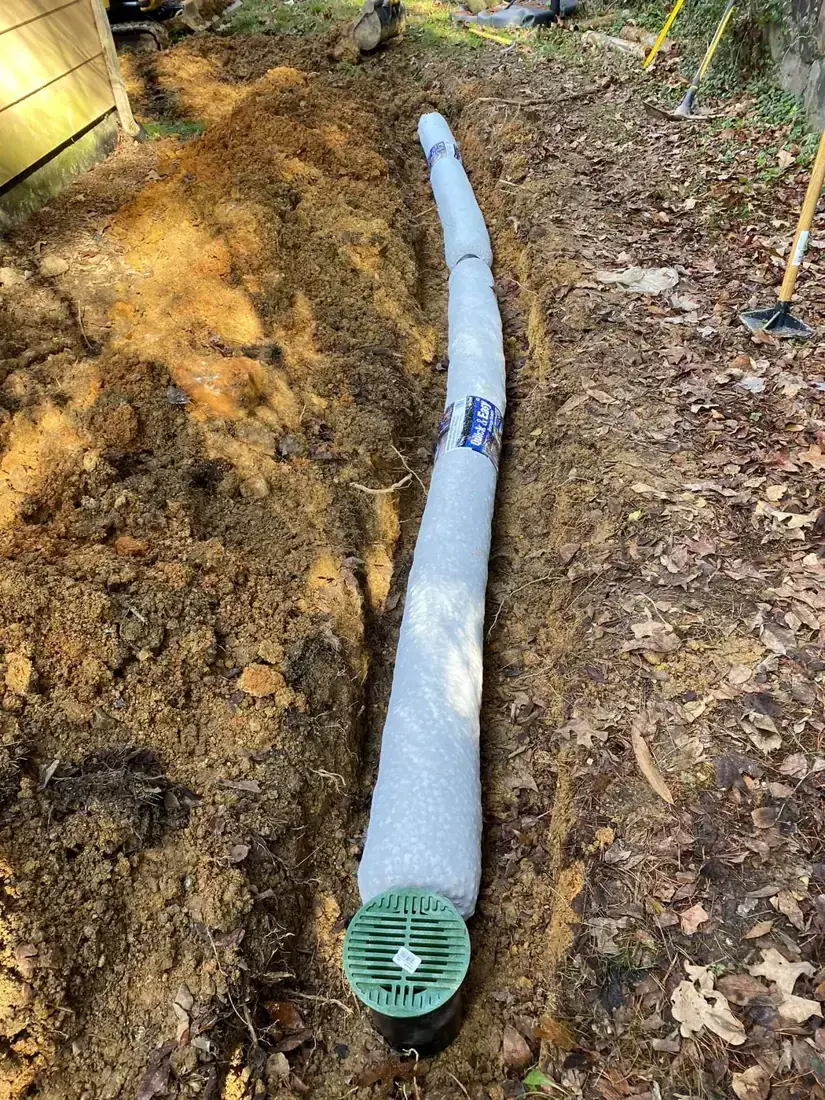
Keep roof drains, driveway runoff, and a sloped yard from sending extra water across the field. Surface water should be diverted around it.
When a conventional field will not fit, see mound, pumped, and aerobic systems.
How a drain field installation works, step by step
Locate and evaluate
We walk the lot with you, mark where the house, well, driveway, and trees sit, and review any soil report already on file.
Soil report and field design
A certified soil classifier maps the soil. The field is designed from that report and sized to the permitted bedroom count, with a reserve area.
Environmental Health permit
The design goes to Dawson County Environmental Health for approval. We do not build a field before the permit is in hand, because a field built without approval can be ordered removed.
Build, inspect, and mark the reserve
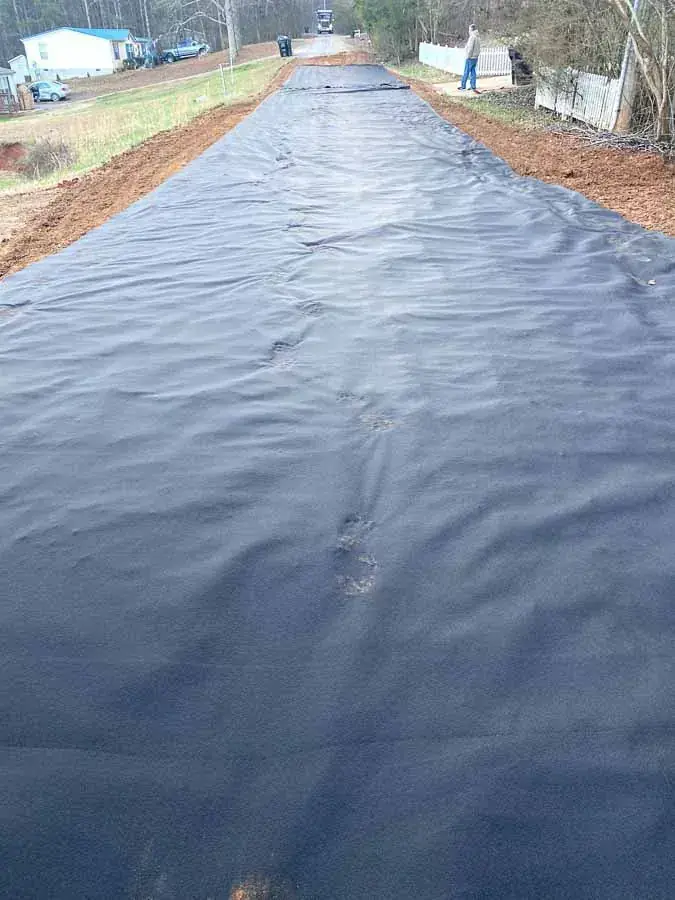
We build the field, call for the inspection before it is covered, grade the site, and mark the reserve area on your plat.
Why homeowners call us first
- We start with the soil. Field size and type follow the report, not a rule of thumb.
- We protect the reserve area. It goes on your plat so the next owner knows where it is.
- We keep heavy equipment off the field. Compaction is the quiet killer, and we plan access to avoid it.
- Free estimates, itemized. Trench, material, soil report, and permit are separate lines.